Why is FLOW pumping
The real fuel is a 50.34M FLOW buyback-and-burn, exchange-service normalization, and Korea-driven headline momentum.
The catch? Spot volume is heavily Korea-led and March unlock/supply risk is not dead, so chasing green candles without a level is how traders get farmed.
1. Why is FLOW pumping today? Catalysts that actually matter
Let’s break this down. Why is FLOW pumping today? Because this is not a random beta bounce. Bitcoin is holding the tape together, sure, but BTC dominance is still high enough that this feels like a selective alt market, not a free-for-all. In a tape like this, the names that rip are the ones with a real headline, real volume, and a narrative traders can actually sink their teeth into.
FLOW has all three. First, the 50M FLOW buyback-and-burn announcement matters more than the average press release. Float compression is one of the few catalysts traders can feel in the order book. When the market believes supply is being actively absorbed, price can move a lot faster than fundamentals people expect.
Second, there’s a relief trade angle. The March 2026 Flow ecosystem update points to a normalization story after the late-December security mess. That’s a big shift in framing. The market goes from asking, “Is this thing broken?” to asking, “Wait, are they actually getting this cleaned up faster than expected?” That change in narrative alone can squeeze a chart hard.
Third, Korea is part of the story, and that matters more than people admit. Listing and delisting headlines in Korea don’t just move sentiment; they move liquidity. That’s the kind of setup that can force shorts to cover, bait momentum traders, and stretch a move well beyond what looks reasonable on paper.
If you want the source trail, keep these tabs open: Flow official site, Flow on X, CoinGecko FLOW market page, and Tokenomist FLOW unlock page. Put it all together and the picture is pretty clear: this is a supply-shock trade with a Korea-led squeeze component, not just a random headline candle.
2. Whale accumulation zones and on-chain flow
Here’s the kicker: I did not see a clean, fresh public signal showing one obvious mega-whale wallet aggressively scooping FLOW today. I’m not going to invent a whale narrative just because it sounds sexy. If the public evidence isn’t there, the adult move is to say so.
But smart money did leave footprints. The biggest bid on the board is the foundation itself. If the buyback really came from open-market purchases, that’s not cosmetic. That’s actual absorption. In crypto, a lot of “support” is just vibes. This one at least has a mechanical supply story behind it, and that matters.
Now look at the market structure. FLOW spot activity is heavily skewed toward Upbit, while Binance and Bybit contribute much smaller slices. Translation: this move has a very strong Korea-led impulse. That can create violent upside because local spot enthusiasm hits hard, but it also means the move can develop air pockets if that enthusiasm cools off.
From a trader’s perspective, I’d treat $0.040–$0.046 as the most likely smart-money reload zone. That’s not a wallet-level cost basis. It’s the zone where the market has the best odds of showing real sponsorship if bulls still own the move. Above the high $0.048s, momentum can keep working. Below $0.046, the whole setup starts looking a lot more fragile.
3. Should you buy now? “Why is FLOW pumping” is the wrong question if RSI is cooked
This is where late buyers usually get trapped. On the 4H chart, FLOW looks overheated, with RSI sitting in the mid-70s zone by my trading estimate. That does not mean it has to top instantly. It does mean your risk/reward gets worse the higher you chase. Smart traders don’t confuse strength with a free entry.
Now look under the hood. Total 24h volume exploded, but the composition is telling. The lion’s share of spot activity is coming from Upbit, while Binance and Bybit are much smaller contributors. That matters. It means the headline candle looks broader than it really is. The move is real, but the confirmation is narrower than many traders will assume when they see a giant green percentage.
Then there’s the tokenomics trap. The Tokenomist FLOW unlock page flags unlock activity in March 2026, and the total-supply framework is still effectively infinite. I couldn’t verify the exact March tranche from the public snippet I saw today, and that uncertainty is exactly the problem. If the market starts refocusing on emissions, traders who bought the green candle can get hit faster than they expect.
So if you’re asking whether you should ape in right here, my answer is simple: not in the middle of expansion. A reclaim around $0.050, or a clean wick-and-reclaim around the high $0.048s, is the more professional entry. Here’s the kicker: a good coin can still be a bad trade if your timing is garbage.
4. 🎯 Bitcoin Kevin’s realistic take-profit map (TP1, TP2)
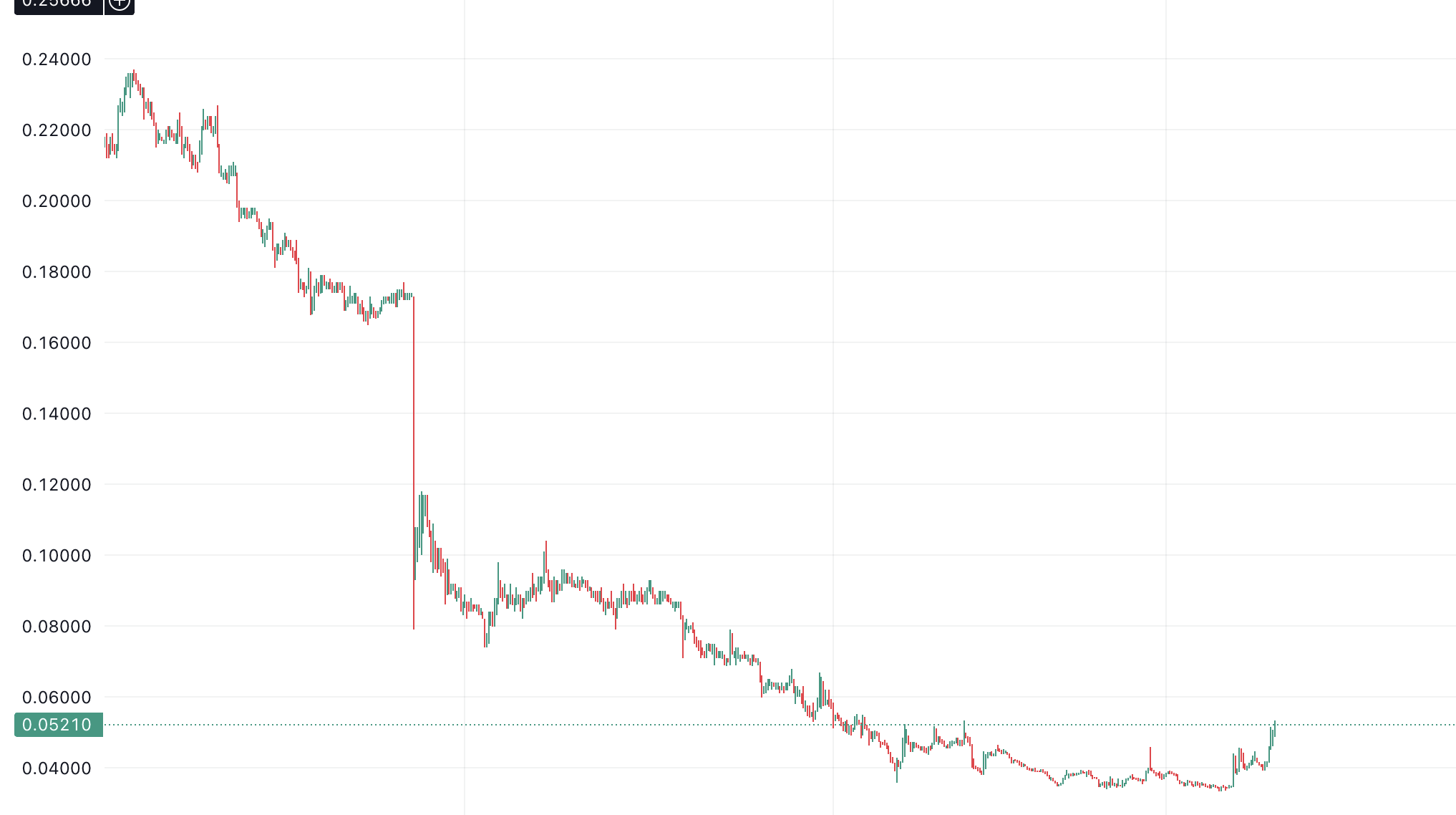
Let’s talk levels. Primary timeframe: 4H. Trend confirmation: 1D. If FLOW is trading around $0.052–$0.053, my first realistic take-profit zone is $0.0580–$0.0585. That’s the first obvious supply pocket above the breakout, the kind of level where early longs scale out and late longs finally discover what slippage feels like.
If you’re a fast trader, this is not the place to get greedy. Taking 30–50% off at TP1 is not bearish; it’s disciplined. Event-driven altcoins can rip hard, but they can also mean-revert like a brick once the emotion burns off.
TP2 sits at $0.0630–$0.0640. That’s the stretch target if bulls can punch through TP1, survive the retest, and keep volume from falling off a cliff. In other words, TP2 is available, but it has conditions. No volume, no conviction. No conviction, no reason to hold out for the moon.
My practical playbook is simple. Aggressive mode: trim 40% at TP1, another 40% at TP2, and let the last 20% ride only if daily structure stays healthy. Conservative mode: take at least half off at TP1 and protect the rest with a break-even stop. Home runs are fun. Booked gains are better.
5. Downside defense and stop-loss line
You can’t talk upside without defining downside. First support sits around $0.0495–$0.0480. If bulls hold that zone, the move still looks like a normal cooldown rather than a failed breakout. Lose it briefly and reclaim it? Fine. Lose it and just sit below it? Different story.
The real line in the sand is $0.0460. If FLOW starts printing repeated 4H closes below that level, I’d treat the move as materially weakened. At that point, the burden of proof shifts back to the bulls.
My hard invalidation for an aggressive trade sits below $0.0438. For swing traders, a daily close below $0.0420 is where I stop arguing with the chart and start respecting it. No ego, no “it’ll come back,” no drama. Just risk management.
Bottom line: FLOW has a real catalyst. That does not make every entry a good entry. Wait for structure. Respect the squeeze. And never forget that a Korea-led momentum move can flip from rocket fuel to trap door in a heartbeat. Smart money isn’t just moving; it’s managing exits while everyone else is still posting green candles.
FAQ
Is FLOW a good chase right now?
Not in the middle of expansion, in my view. A reclaim around $0.050 or a clean wick-and-reclaim in the high $0.048s offers a much cleaner setup than blindly buying strength.
Is this just a burn headline pump?
No, but the burn is the main spark. The move also has a relief-trade angle from exchange-service normalization and a Korea-driven liquidity squeeze layered on top.
What’s the biggest hidden risk here?
The market-structure risk. Volume is heavily concentrated in Korea, and tokenomics are not magically fixed just because one burn headline hit the tape. If momentum cools, the air pocket can show up fast.