Should you buy SIGN now
Binance is up 11.50%, Bybit 11.47%, and Upbit KRW 11.46%, while 4H RSI is already 73.8 and daily RSI is 70.6, so this is a conditional setup, not a blind chase.
If 0.0538 breaks cleanly, TP1 sits at 0.0590 and TP2 at 0.0620. If price loses 0.0500 on a 4H closing basis, the trade quality drops fast.
1. Before asking “Should you buy SIGN now,” check the backdrop and why it is still strong
Should you buy SIGN now is the right question because the broader tape is not helping. BTC is down about 3.70% over 24 hours, total crypto market cap is off roughly 3.28%, and Bitcoin dominance is sitting near 56.15%. That means this is not a broad altcoin melt-up. This is selective relative strength, and SIGN is one of the very few names still showing it.
That strength is not isolated to one venue either. Binance spot is up 11.50%, Bybit spot 11.47%, and Upbit KRW 11.46%. When a smaller-cap token continues to print across multiple exchanges while BTC is getting hit, that deserves attention. It tells you money is choosing this name, not just stumbling into it.
At the same time, I couldn’t verify a same-day blockbuster headline that explains the entire move. The cleaner interpretation is ongoing narrative repricing. Sign’s official website and the S.I.G.N. docs keep framing the project around infrastructure for money, identity, and capital. That plugs directly into the market’s interest in digital ID, RWA rails, and compliant crypto infrastructure.
That narrative gets reinforced by TokenTable, which focuses on large-scale allocation, vesting, unlock logic, and distribution tooling, and by the project’s official X account. In plain English, SIGN has a story that traders can still justify, even in a weak market. That matters. But a strong story and a smart entry are not the same thing.
2. Whale cost basis and on-chain behavior
Let’s keep this grounded. I did not find a verified single-wallet event that fully explains today’s move. So instead of pretending there’s one magical whale address to follow, I’d rather read the structure where larger players are probably defending price.
On CoinGecko, SIGN is sitting near an $87.8M market cap with an FDV around $535.1M. Circulating supply is still only 1.64B out of a 10B total. That’s a low-float structure, and low-float structures do not need infinite demand to move. They just need persistent bids in the right zones.
Right now the clearest short-term accumulation band looks like 0.0510 to 0.0520 USDT. That’s where recent pullbacks have started getting absorbed before price re-expands into the 0.053s. Below that, 0.0500 is the tactical fail line. Deeper support sits around 0.0460 to 0.0450, which is where the older sponsor bids showed up before this leg accelerated.
Volume also tells the move is real enough to respect. Binance has printed about $9.96M in 24-hour turnover, Bybit about $1.96M, Upbit KRW around KRW 23.15B, and global turnover is near $65.2M. That’s meaningful. But because the float is still relatively thin, the same structure that helps the squeeze can punish late buyers if momentum fades.
I’ve seen this exact setup too many times to romanticize it. A coin holds up while BTC bleeds, traders start talking themselves into “institutional accumulation,” and then the third green candle becomes the emotional entry for retail. That’s usually where discipline dies. My rule now is simple. First, I want cross-exchange confirmation. SIGN has that today. Second, I want to know where buyers are actually defending price. Right now that’s around 0.0510 to 0.0520, not randomly in the middle of a hot candle. Third, I want the unlock calendar in the back of my mind before I touch size. Good narratives can survive. Bad entries rarely do. I’d rather miss the first piece of upside and buy confirmation than become the liquidity someone else needed to exit a beautiful chart.
3. “Should you buy SIGN now?” RSI heat, entry risk, and the unlock trap
Now for the uncomfortable part. The setup is strong, but it’s no longer cheap. On Binance SIGNUSDT, the 4H RSI is about 73.8 and the daily RSI is around 70.6. That’s hot. Not impossible, not automatically exhausted, but definitely hot enough that you cannot justify a blind chase by saying “it still looks bullish.”
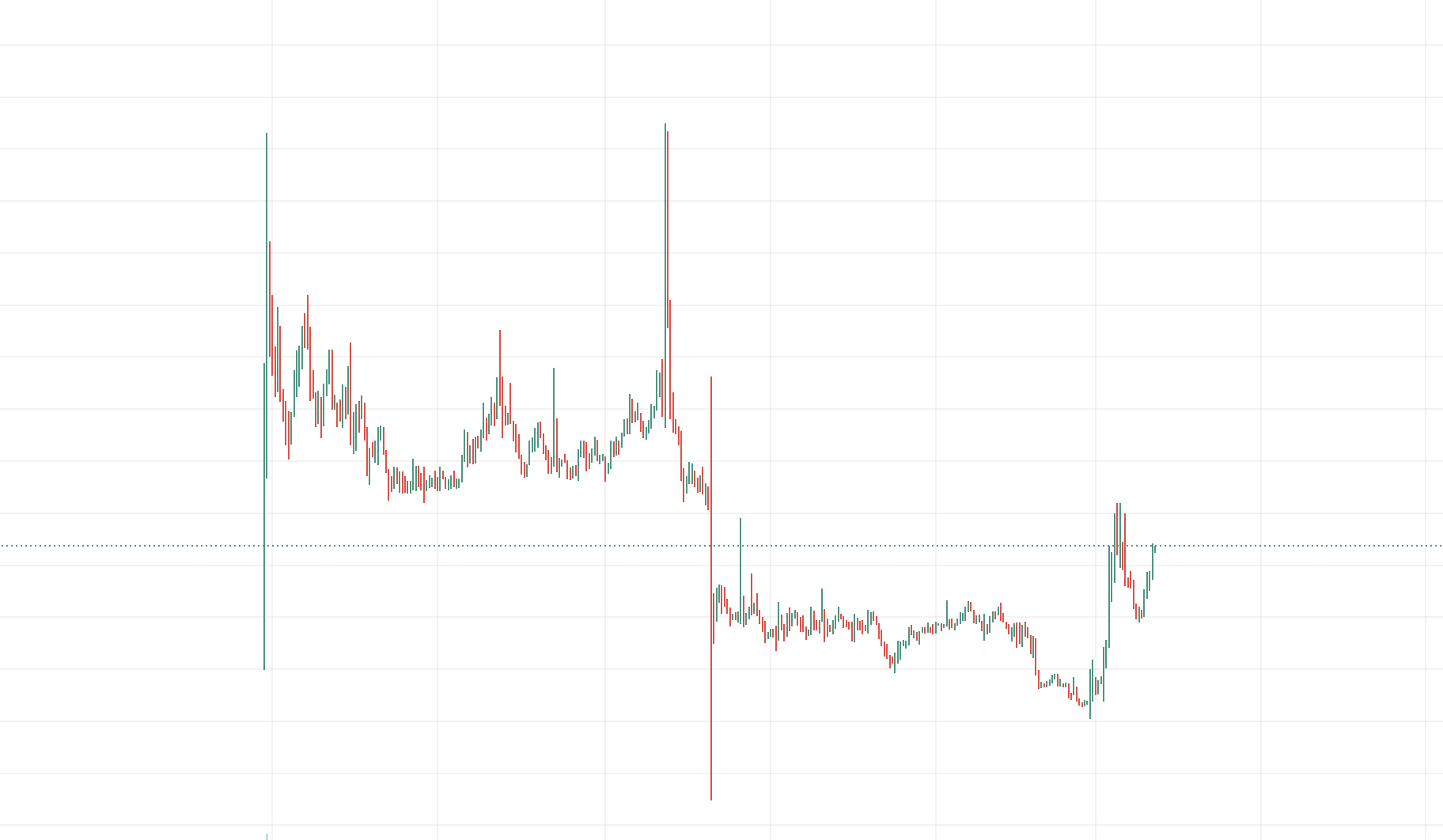
The immediate decision point is simple. If SIGN can close a 4H candle above 0.0538 and hold that level as support, the breakout setup becomes valid. If it cannot, then you’re either waiting for a cleaner pullback into 0.0510-0.0520 or you’re not in the trade. Those are the only two disciplined choices here.
The bigger problem is supply. Based on the April 28, 2025 TGE timeline and the public vesting framing, April 28, 2026 is the date traders should already be thinking about. This is an inference from the public one-year cliff structure, not a claim that a live tracker has already printed the exact next unlock amount today. But the point stands: low-float tokens can look fantastic right before supply becomes the market’s main concern.
If you model the public allocation buckets at a high level, the backer, team, and core contributor buckets alone could imply roughly 144.4M SIGN per month once those post-cliff linear releases begin. Against a 1.64B circulating supply, that is material. So the answer to “Should you buy SIGN now?” is not a clean yes or no. It’s yes, only if your entry is level-based and your risk is defined.
4. 🎯 Bitcoin Kevin’s realistic take-profit map (TP1, TP2)
This is the clean tactical map. If price confirms a 4H close above 0.0538 and does not instantly lose it, the first upside magnet is 0.0590 USDT. That’s my TP1. It lines up with the lower edge of a meaningful daily resistance shelf, and this is the kind of level where disciplined traders usually trim first.
TP2 sits at 0.0620 USDT. That’s the heavier overhead zone from the early March supply area. If SIGN gets there, you are no longer trading just a short squeeze. You are testing whether the market is ready to genuinely reprice the token higher on a swing basis.
But here’s the kicker. Because BTC is still weak and dominance is still elevated, I would not treat TP2 as automatic. I would treat 0.0590 as the place to pay yourself first and only lean for 0.0620 if volume stays healthy and 0.0538 remains defended. In this market, extension targets need confirmation, not optimism.
5. Defense lines and stop-loss zones if this setup fails
The first defense line is 0.0510 USDT. That is the area where recent buyers have been absorbing pressure. If price can’t hold that zone, the short-term momentum thesis weakens fast.
The next practical stop area is 0.0500 USDT. Lose that on a 4H closing basis and the trade quality degrades sharply. Below that, 0.0460 becomes the deeper structural line, and if that fails, the whole momentum read needs to be reconsidered.
That is the real answer today. SIGN is strong, but strength does not remove risk. In fact, when a token is this hot, the best trades are usually the ones where your invalidation level is already decided before you enter. That is how you survive the days when the chart looks perfect right before it punishes impatience.
FAQ
Should you buy SIGN now at market?
Only if you are trading a confirmed breakout above 0.0538 or a controlled pullback that holds 0.0510-0.0520. Chasing a hot candle without a plan is a low-quality entry.
What is the biggest risk right now?
The main trap is the combination of a hot RSI profile and the April 28, 2026 post-cliff supply window. Low float helps the upside now, but it can also make unlock-driven volatility much harsher later.
What is the cleanest trade plan?
Breakout traders should watch 0.0538. Pullback traders should watch 0.0510-0.0520. TP1 is 0.0590, TP2 is 0.0620, and 0.0500 is the level where risk management needs to become strict.