SIGN price prediction
As of March 22, 2026, Binance is up 9.96%, Bybit 10.22%, and Upbit’s USDT pair 5.06%, but 4H RSI is already 71.5, so chasing green candles is a higher-risk move now.
The clean map is TP1 at 0.0525 USDT, TP2 at 0.060-0.062 USDT, with 0.0460 to 0.0450 acting as the first real line in the sand.
1. SIGN price prediction starts with today’s backdrop and catalyst map
A useful SIGN price prediction starts with one simple fact: this is not a broad risk-on alt market. BTC is down about 2.06% over the past 24 hours, total crypto market cap is off roughly 1.81%, and Bitcoin dominance is sitting near 56.35%. So let’s be clear, this isn’t a random “everything is mooning” tape. This is selective strength, and SIGN is one of the few names actually showing it.
That matters because the move is showing up across venues, not just on one noisy chart. As of today, SIGN is up 9.96% on Binance spot, 10.22% on Bybit spot, and 5.06% on Upbit’s USDT market. Even Upbit KRW is up 3.87%. Here’s the kicker: when a smaller-cap token starts printing the same direction across multiple exchanges while BTC is red, that’s not background noise. That’s relative strength worth paying attention to.
Now, is there a single headline that explains the whole thing? Not really, at least not from the public sources I could verify. The cleaner read is that traders are repricing the narrative. Sign’s official site and the S.I.G.N. documentation frame the project as sovereign-grade infrastructure for money, identity, and capital. That plugs directly into the market’s recurring obsession with CBDCs, regulated stablecoins, digital identity rails, and tokenized real-world assets.
The deeper product stack reinforces that angle. TokenTable emphasizes large-scale rules-based allocation, vesting, unlock logic, and compliant distribution. The project’s X account gives the market a clean narrative bridge between infrastructure, token distribution, and identity tooling. In plain English, this is the kind of token that can attract both narrative traders and structure traders at the same time. That combination is exactly why price can stay sticky even while the broader market is wobbling.
2. Whale cost basis and on-chain behavior
Let’s keep the signal clean. I did not find a verified “one giant whale just bought the whole move” type of public wallet event for today. Anyone pretending otherwise is likely just storytelling after the fact. But you don’t need a sensational wallet screenshot to figure out where larger players are likely defending size.
From CoinGecko, SIGN currently sits around an $81.4M market cap with an FDV near $496.3M. Circulating supply is about 1.64B tokens against a 10B total supply. That’s a classic low-float setup. Smart money doesn’t need infinite volume to move a chart like this. It just needs enough demand to lean on a relatively thin float and force late buyers into the trade.
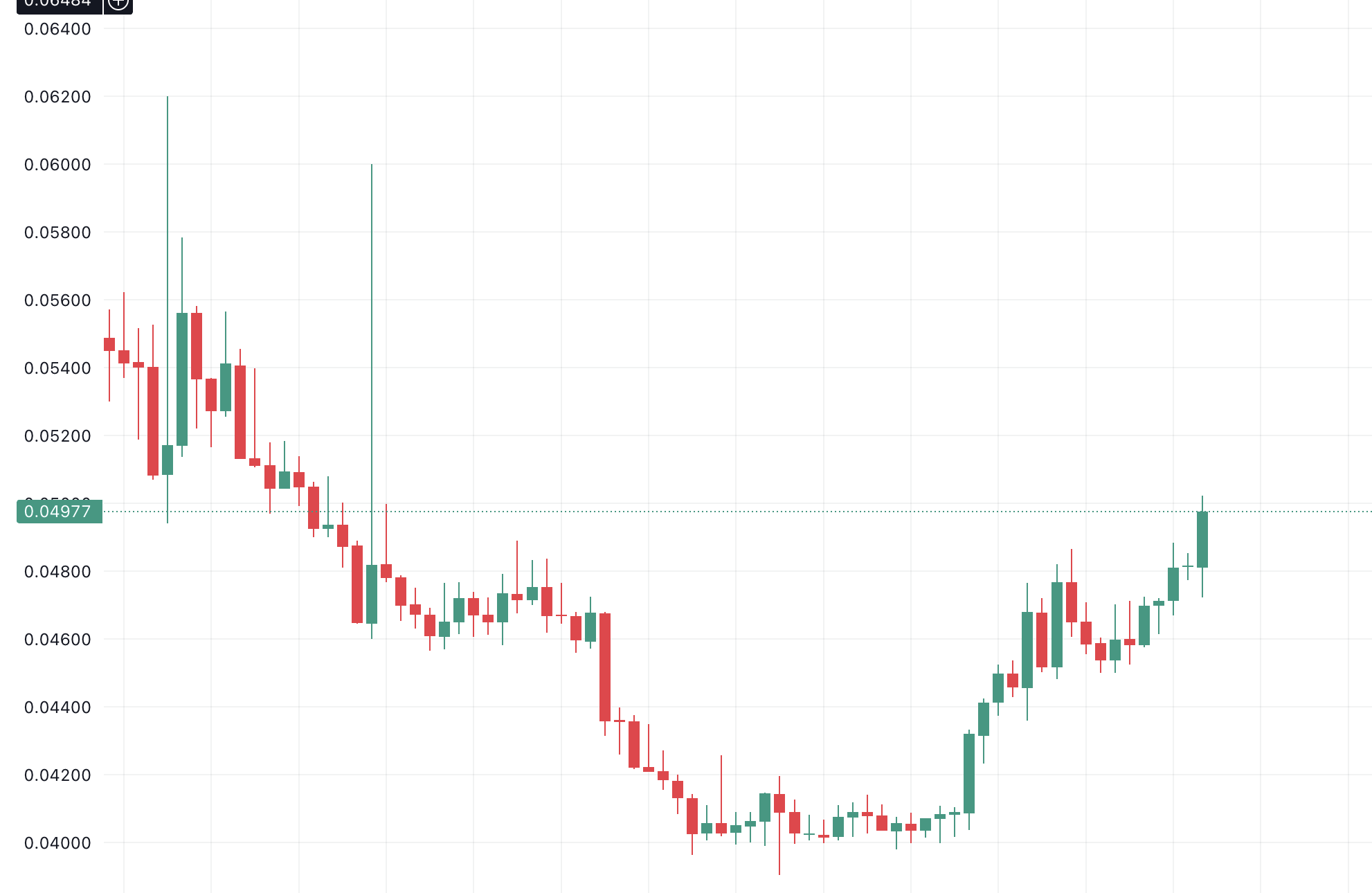
So instead of pretending we know every whale’s exact entry, I’d rather focus on the zones where buyers have repeatedly shown their hand. On the 4H chart, the first sponsor-bid region is 0.0460 to 0.0450 USDT. That pocket has acted like a recurring demand shelf. Below that, 0.0436 is a secondary support line. Then you get the deeper swing-defense zone around 0.0390 to 0.0400 USDT, which is where the structure starts to matter a lot more.
Volume confirms the move is real enough to respect. Binance has pushed about $6.10M in 24-hour turnover, Bybit about $1.08M, and global daily volume is sitting near $36.5M. Upbit KRW has also done meaningful local flow. So no, this isn’t just a ghost candle. But yes, because of the token’s smaller size and lower float, the same structure that helps it squeeze higher can also make pullbacks nastier than people expect.
I’ve traded enough low-float altcoins to know the biggest mistake isn’t missing the first move. It’s buying the move after convincing yourself the story makes you safe. I’ve been there. A strong narrative, a clean breakout, decent volume, multiple exchanges confirming the move, and suddenly every pullback feels “buyable.” That’s exactly when discipline disappears. Over time I learned to strip it back to three questions. First, is the strength cross-exchange or just a one-venue distortion? Second, is there a real defense zone on the 4H chart where larger players are clearly stepping in? Third, is there a token unlock or supply event that can wreck the trade even if the story stays bullish? SIGN checks the first two boxes better than most alts today, but the unlock risk means I still treat this as a tactical trade, not a blind conviction hold. I’d rather buy confirmation or buy a controlled retest than donate liquidity into a hot candle because the chart looks exciting.
3. Should you buy now? RSI heat, entry risk, and the unlock trap
Now for the part traders usually don’t want to hear. Momentum looks good, but this is no longer a casual entry. The 4H RSI is roughly 71.5, while the daily RSI is around 66.6. That doesn’t mean the move is over, but it does mean you’re no longer buying a sleepy base. You’re buying a chart that already has some heat in it.
And that matters because the market structure is mixed. Binance and Bybit are giving you tradable continuation flow, but Upbit’s USDT book is still thin enough that it should not be your main signal. If you’re trying to make a real trading decision, use Binance SIGNUSDT as the primary chart. That’s where the 4H closes, retests, and rejection behavior give you the cleanest read.
The bigger risk, though, is supply. Based on the public tokenomics framing around the April 28, 2025 listing timeline, the one-year cliff setup means April 28, 2026 is the date traders should already have on their radar. Backers, early team members, and core contributors are the buckets that matter most here. Once those cliffs start rolling into linear unlocks, the market will care a lot more about emissions than about elegant product narratives.
If you model the public allocation buckets at a high level, those three categories alone could imply roughly 144.4M SIGN per month once the post-cliff linear release phase kicks in. Against the current 1.64B circulating supply, that’s not trivial. That’s the kind of overhang that can turn “great project, strong chart” into “great liquidity exit for earlier holders” if traders get complacent.
So should you buy now? My answer is conditional. A confirmed 4H close above 0.0500 with follow-through is tradable. A controlled retest into 0.0460 to 0.0450 that holds is also tradable. Buying in the middle of the range just because the candle is green? That’s how good narratives become bad entries.
4. 🎯 Bitcoin Kevin’s realistic SIGN price prediction (TP1, TP2)
This is where the trade gets practical. My preferred execution chart is the Binance SIGNUSDT 4H. Right now, the first tactical hurdle is the 0.0500 psychological level and the recent local high around 0.0501. If bulls can close above that area on a 4H basis and hold the retest, the path to the next resistance shelf opens up.
TP1 sits at 0.0525 USDT. That’s the first clean take-profit zone because it lines up with the lower edge of the March rejection shelf. This is where disciplined traders usually take something off. If you want a simple rule, trimming 30% to 40% of the position there makes sense.
TP2 sits at 0.060 to 0.062 USDT. That’s the heavy overhead zone that kept rejecting price during the early March spike sequence. If SIGN gets there, you’re not just trading noise anymore. You’re testing whether the market is ready to reprice the token into a more meaningful swing breakout. But let’s be real, getting there without holding above 0.0525 first would be a lot harder.
Here’s the kicker. Because BTC is still soft and dominance remains elevated, I would not treat TP2 as a guaranteed destination. I’d treat it as an extension target that only becomes more realistic if volume stays healthy after the first breakout. In this market, good assets still need good tape.
5. Defense lines and stop-loss zones if this setup fails
If you care about protecting capital, this section matters more than the targets. My first support shelf is 0.0460 USDT. That’s the near-term area where buyers have repeatedly absorbed pressure. If 4H candles start accepting below it, the immediate momentum case weakens fast.
The next practical stop zone is 0.0450 USDT. If that breaks and buyers can’t reclaim it quickly, the trade starts losing its tactical edge. Below that, 0.0436 becomes the secondary damage-control line. And if the chart loses 0.0390 USDT on a meaningful basis, the whole swing structure starts to look compromised.
That’s the real message today. SIGN is strong, but this is still a market where only the strongest names survive. So don’t confuse a strong story with a free pass on risk management. In an environment like this, the best trades are the ones where your exit plan is already decided before you click buy.
FAQ
Is it too late to buy based on this SIGN price prediction?
Not necessarily, but it is late enough that entry quality matters. A confirmed 4H close above 0.0500 or a clean retest of 0.0460-0.0450 is far better than chasing a stretched green candle.
What is the biggest risk to this setup?
The April 28, 2026 post-cliff supply window. Low float helps the upside now, but it also means new emissions can weigh on price harder once unlock pressure becomes a live issue.
What is the cleanest way to trade it?
Treat it as a tactical 4H setup. Respect TP1 at 0.0525, watch whether 0.0500 becomes support, and don’t stay stubborn if 0.0460 to 0.0450 fails.