Why is SIGN pumping
This move looks less like one random headline candle and more like a Korea-led spot squeeze layered on top of a sovereign infrastructure narrative, exploding volume, and negative CEX net flow.
The catch is obvious: low float cuts both ways, and the April 28 backer unlock means chasing green candles without a plan is how traders donate profits back to the market.
- 1. Why is SIGN pumping today? Key catalyst breakdown
- 2. Whale accumulation zone and on-chain flows
- 3. “Should you buy now?” ‘Why is SIGN pumping’ matters less than RSI heat and unlock risk
- 4. 🎯 Bitcoin Kevin’s realistic take-profit map (TP1, TP2)
- 5. Defensive support and stop-loss levels if momentum breaks

1. Why is SIGN pumping today? Key catalyst breakdown
Why is SIGN pumping today? Let’s break this down. Bitcoin is trading under pressure, the Altcoin Season Index still isn’t screaming broad altseason, and this is not the kind of tape where every random alt rips at once. It’s a selective market, and SIGN is one of the few names attracting real spot sponsorship.
Three things stand out. First, Korean spot demand is doing the heavy lifting. Second, trading activity exploded, which matters a lot in a relatively low-float token. Third, the market is re-rating SIGN as more than just an airdrop or token distribution tool. Traders are increasingly viewing it as a sovereign-grade digital infrastructure play, and that kind of narrative can hit hard when momentum shows up.
The official Sign website, project docs, whitepaper, and official X account all point in the same direction. This is not being sold as a cute consumer app. It is being framed around money, identity, and capital infrastructure. Add live spot access on Upbit, Binance, and Bybit, and you’ve got the perfect setup for a Korea-led move to spill into global momentum flow.
Here’s the kicker: I don’t think this move is best explained by one brand-new headline that blindsided the market today. It looks more like a spot squeeze built on an existing narrative, with traders suddenly deciding SIGN deserves a higher multiple. In crypto, that kind of repricing can travel a lot farther than people expect, right up until the late crowd mistakes momentum for a risk-free entry.
And yes, legacy narrative memory matters too. The market still remembers the YZi Labs connection and the broader government-scale infrastructure angle. That doesn’t guarantee a straight line up, but it does help explain why the bid showed up so aggressively once spot volume caught fire.
2. Whale accumulation zone and on-chain flows
Let’s be honest for a second. Public dashboards rarely hand you a clean “this whale bought exactly here” print. So instead of pretending we have magical wallet X-ray vision, I look at exchange flow plus price acceptance zones. Smart money leaves footprints in structure, not just in screenshots.
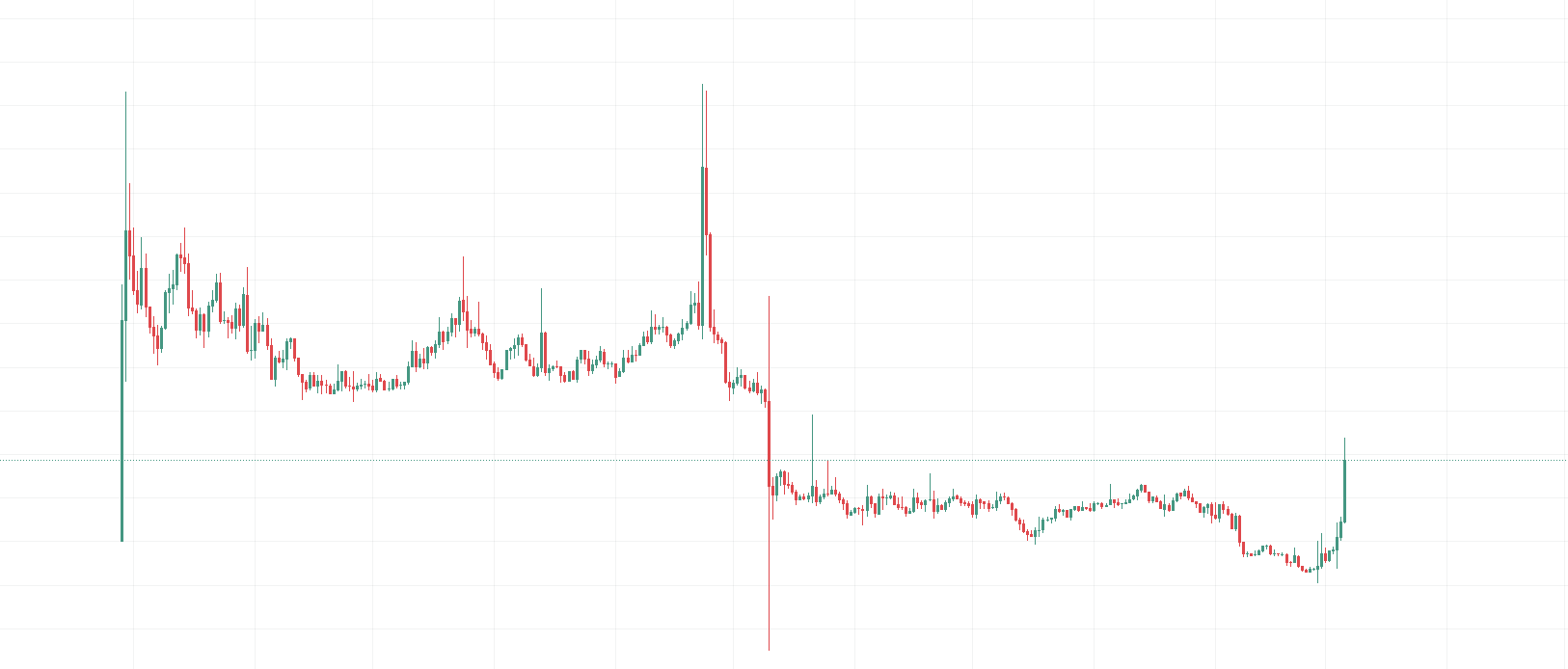
The chart tells a pretty clean story. After washing out near $0.0205, SIGN built a base between roughly $0.023 and $0.0315. Then the market kept leaning on $0.0356 and the older $0.0360-$0.0365 supply zone. Once that shelf finally gave way, the likely smart-money accumulation band shifted higher. In plain English, $0.030 to $0.036 looks like the real battlefield where stronger hands were willing to absorb supply.
On-chain flow adds fuel to the story. Net CEX flow turned negative, which usually means more tokens are leaving exchanges than coming in. That’s not automatic bullish magic by itself, but on a day with aggressive spot bidding it can tighten liquid supply and make the order book easier to lift. That’s exactly the kind of setup low-float movers love.
Upbit matters here — a lot. When one venue commands this much of the tracked spot volume, it tells you where today’s narrative is catching fire. But that’s also the trap. Korea-led runners can move like rockets on the way up and unravel just as fast once the crowd gets bored. So don’t obsess over matching the whales tick-for-tick. Focus on whether the structure they created is still intact.
I’ve traded enough low-float altcoins to know how this movie usually ends for undisciplined traders. The first candle gets everyone euphoric, the second candle convinces them they’re geniuses, and the third candle is where the market decides who actually had a plan. I’ve had both versions. I’ve sold too early and watched a coin keep ripping without me, and I’ve also gotten greedy, refused to scale out, and watched a beautiful green PnL turn into a painful lesson.
What changed my game was simple: I stopped trying to catch every last dollar and started treating exits like part of the trade, not an afterthought. In low-float names, I rarely go all-in after a vertical candle. I scale into strength only if structure confirms, and I scale out into obvious resistance even when Twitter is screaming for higher targets.
That approach feels boring when the chart looks sexy, but boring is exactly what protects your capital. With SIGN, I’d do the same thing. Respect the move, respect the narrative, but respect the supply overhang even more. The pros don’t get paid for being the loudest. They get paid for being the least emotional when everyone else is losing their minds.
3. “Should you buy now?” ‘Why is SIGN pumping’ matters less than RSI heat and unlock risk
Should you buy right here? My answer is simple: not blindly. Daily RSI around 60 is elevated, but it isn’t full-blown euphoric insanity on its own. The bigger issue is candle expansion. A coin can have a reasonable daily RSI and still be a terrible chase if it just ripped 40%+ in one session. That’s where inexperienced traders confuse momentum with a clean entry.
The short-term structure is what makes this tricky. Lower timeframes can cool off while the 4-hour and daily trend still look strong, which creates that classic “it feels bullish but buying it feels late” dilemma. That’s not a bug. That’s the market forcing you to choose between discipline and FOMO.
Here’s the part newer traders miss: unlock risk matters more than vibes. Tokenomist shows the next SIGN unlock on April 28, 2026, allocated to backers. With such a small portion of total supply unlocked today, dilution overhang is very real. Low float helps on the way up, but it also becomes a tax on late buyers if more supply starts hitting the market.
There’s also a subtle tokenomics trap here. Data vendors do not even present the unlocked supply the exact same way right now. Different methodologies happen, sure, but for traders the message is still the same: FDV is much heavier than the current market cap, and the fully unlocked picture is nowhere near today’s tradeable float. That’s the kind of setup that can keep a coin explosive while simultaneously making it dangerous.
So what would I actually do? Either wait for a pullback into the $0.041-$0.043 area and see if buyers defend it, or wait for a clean daily close above $0.0537 and trade the breakout retest. Everything in between is where FOMO likes to cosplay as conviction. Smart money doesn’t need to chase every green candle. It just needs to avoid the dumb ones.
4. 🎯 Bitcoin Kevin’s realistic take-profit map (TP1, TP2)
Now let’s talk exits, because that’s where people actually make money. My execution framework here is 4H for execution, daily for confirmation. If you’re scalping, the 4-hour structure matters most. If you’re swinging, daily closes tell the truth.
TP1 sits at $0.0532-$0.0537. That’s the first real resistance cluster because it lines up with today’s spike high and the top of the daily range. If you bought lower, this is where taking some chips off the table makes sense. Not because the move is dead, but because professionals pay themselves on the way up instead of waiting for the perfect fantasy top.
TP2 is $0.0568. That’s the more realistic continuation target if momentum keeps pressing after first resistance gets chewed through. This is where the chart can still look bullish while the reward-to-risk for fresh entries starts fading. Great place to sell strength. Terrible place to fall in love.
And yes, there’s a stretch target too. If SIGN can close a daily candle above $0.0537 and then hold that breakout, the next extension opens up toward $0.0624. That’s the bonus round, not the base case. Treat it like dessert, not dinner.
5. Defensive support and stop-loss levels if momentum breaks
For defense, I’d map this in three layers. First support is $0.0412-$0.0392, where the 50 EMA/MA zone starts to matter. A strong runner should at least try to bounce there. If 4H candles lose that pocket and can’t reclaim it quickly, momentum is cooling and the easy part of the trade is probably over.
The more important swing invalidation zone is $0.0356-$0.0365. That’s the old breakout shelf. Once price clears a major ceiling, that ceiling is supposed to become floor. If SIGN starts closing daily candles back below it, the bullish thesis weakens fast and this starts looking more like an exhaustion move than a healthy trend continuation.
Final line in the sand is $0.0315. Lose that, and you’re no longer talking about a healthy pullback. You’re talking about price rotating back into the old box. And that’s where “diamond hands” usually turns into “I should have had a plan.” In low-float names like SIGN, emotional holding is not a strategy. It’s just delayed regret.
Key Q&A / FAQ
Is it too late to buy SIGN right now?
It’s too late to buy blindly. It’s not too late if you’re waiting for either a clean pullback into support or a confirmed breakout retest. Chasing vertical candles is not a strategy. It’s a tax on impatience.
When is the next SIGN unlock?
Based on the current public schedule, the next major SIGN unlock is set for April 28, 2026 and is allocated to backers. That doesn’t guarantee immediate downside, but it absolutely belongs in your risk model.
What would invalidate the bullish setup?
A failed hold of the $0.0412-$0.0392 support pocket would weaken momentum, and daily closes back below $0.0356-$0.0365 would damage the breakout thesis more seriously. Lose $0.0315 and the whole structure looks materially worse.